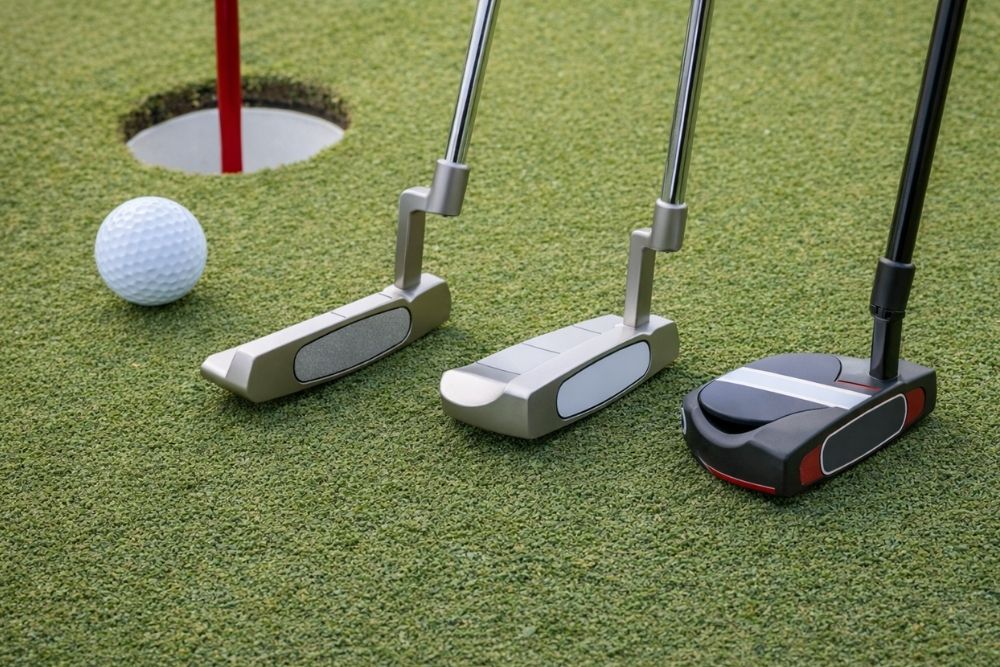
It’s not that it’s difficult to understand, but rather that most players choose their putter based on aesthetics instead of how it complements their stroke type. There is one fact that changes everything: the type of arc in your putting swing should be the starting point of your choice, not an afterthought. Read on to discover exactly why.
What sets a blade apart from a mallet?
The blade putter: Classic and precise
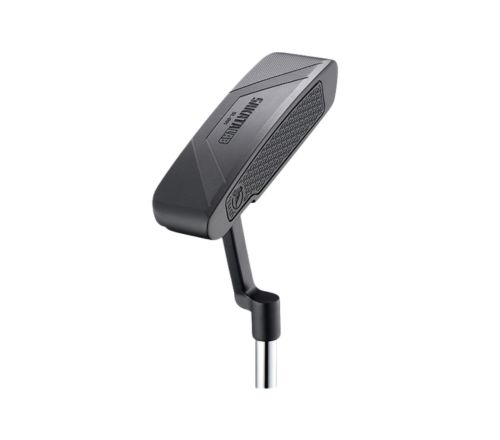
The blade is the most traditional putter shape. It features a long, thin, and compact head, with the weight concentrated mainly along the centre line. This design has been used for decades by the world’s best: the Scotty Cameron Newport 2—one of the most iconic blade putters in golf history—has been in the bags of elite players during the Tour’s most memorable moments.
Its simple structure offers very direct feedback at impact: you feel exactly where you struck the ball and with what force. This is an advantage for players with a well-practised putting stroke, but it can be a drawback for those still finding their technique.
The mallet putter: Modern and forgiving
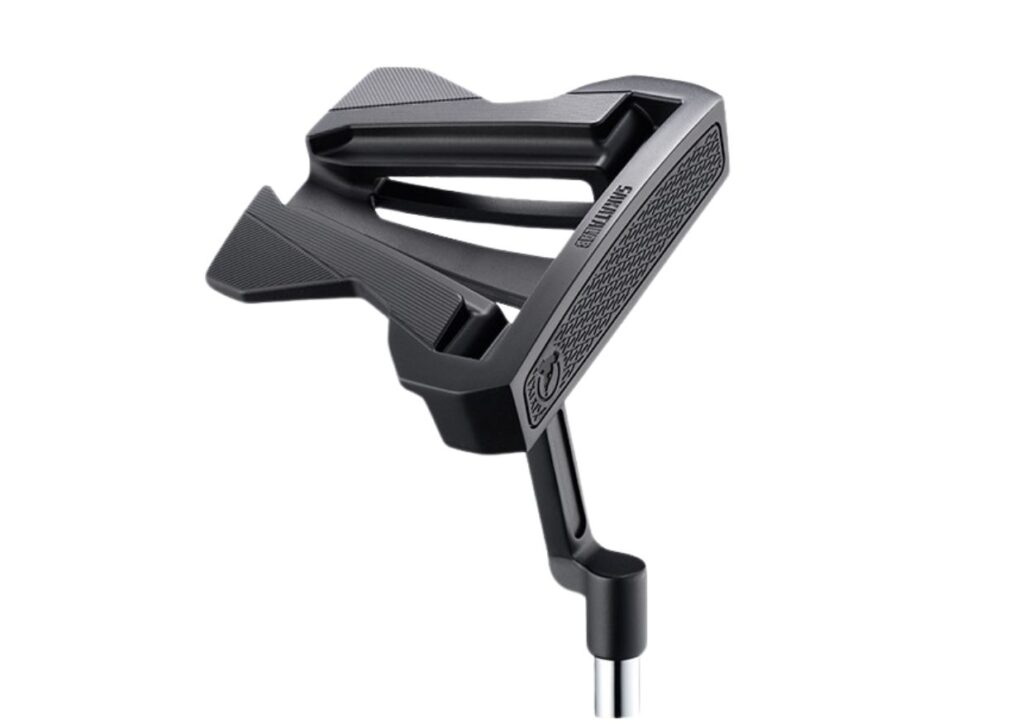
The mallet has a larger head with more depth towards the back of the face. This geometry allows for extreme weight distribution—towards the heel, toe, and rear—which significantly raises the Moment of Inertia (MOI). In practical terms, this means off-centre hits maintain better direction and speed, penalising errors less.
Modern mallets also incorporate more elaborate alignment lines on the top of the head, making aiming easier before the stroke. Models like the Scotty Cameron Phantom, with its revolutionary low-torque design, or the Odyssey AI-ONE putters, represent the most advanced evolution in this category.
Pros and Cons of the Blade
- Pure Feel: Offers immediate and precise feedback.
- Arc Fluidity: Perfect for swings with natural rotation.
- Classic Aesthetics: A clean and minimalist profile at address.
- Low Forgiveness: Miss-hits quickly lose distance and line
- Demanding: Requires great precision at impact.
- Small Sweet Spot: Penalises technical errors more heavily.
Pros and Cons of the Mallet
- Maximum Forgiveness: High MOI stabilises off-centre hits.
- Straight Stroke: Ideal for linear movements without an arc
- Easy Alignment: Visual aids that make aiming correctly much simpler.
- Bulky Design: Can be visually intimidating for some players.
- Soft Feedback: A more muted impact sensation
- Less Feel: Provides less direct information about the strike.
The stroke type: The deciding factor
Arc Stroke → blade or mid-mallet
Straight Stroke → face-balanced mallet
How to Choose Without Making a Mistake
The starting point is to observe your stroke honestly or undergo a professional analysis. At Golfriend’s, we offer a personalised fitting service with a selection of leading brands such as Scotty Cameron, Odyssey, or L.A.B. Golf. Remember: when it comes to your putter, trying before deciding is the most important step to lowering your scores on the green.