52 vs 56 vs 60 Degree Wedges: the right choice starts with the loft of your pitching wedge. Before deciding between these three options, check how many degrees of loft your PW has, because that figure has a much greater influence on your set-up than any ranking or generic recommendation.
With a 46° PW, a 52-56-60 set-up can work well. With a 43° PW, the gap to a 52° wedge may be too large, leaving an important distance gap at the lower end of your iron set.
The key is to maintain a logical progression of lofts and distances, avoiding gaps that are too large or clubs that cover virtually the same shot.
| Loft | Most common role | When it may be unnecessary |
|---|---|---|
| 52° | Full approach shots and mid-range shots after the pitching wedge | If your pitching wedge is already around 48-49° |
| 56° | Bunker shots, pitches and chips: the all-rounder for the short game | If you already play a combination such as 54° and 58° |
| 60° | High shots, limited green to work with and situations where you need very little roll | If you already carry a 58° wedge or rarely play shots that require that much loft |
Your Pitching Wedge Sets the Standard
Pitching wedge lofts have become stronger over the years, and not in a uniform way. Two iron sets from the same year can have pitching wedges with three or four degrees of difference between them. That is the real reason why there is no single answer to “52, 56 or 60?”
The calculation is simple. Note the loft of your PW and space your wedges at roughly four- or five-degree intervals. With a 45° PW, a progression such as 50°-54°-58° can be a good starting point. With a 46°-47° PW, a 52°-56°-60° set-up can work well, provided the distance gaps between the clubs are properly spaced.
And yes, there is a reason why those loft gaps should not be much larger: the bigger the gap in degrees, the bigger the gap in distance, and that is where you start needing half-swing shots that are harder to control under pressure.
What a 52° Wedge Adds
The 52° wedge may be the least glamorous of the three, but it is also one of the most useful for solving a genuine distance-gapping problem. It covers the full approach shot that sits just below the pitching wedge, works well with a full swing and offers a reasonable margin for error.
It is also one of the lofts most at risk of overlapping with another club. If your PW has a strong loft and you also carry a 52°, the two may be covering distances that are too similar. The check is simple: if the average carry of both clubs is too similar, one of them is probably occupying a gap you do not really need.
For many mid- and high-handicap players, two well-spaced wedges below the PW can work better than three lofts that are too close together and end up producing overlapping distances.
Set Gap Wedge or Specialist Wedge?
Not every 50° or 52° wedge needs to be a specialist short-game model. Many iron sets include a gap wedge designed as an extension of the set, with a slightly more forgiving head intended mainly for full shots.
If you use that club mostly from the fairway and with a full swing, keeping the gap wedge from your iron set can give you greater consistency in feel, distance and ease of strike.
A specialist wedge starts to make more sense when you also want to use that loft around the green, open the face or choose the bounce and grind more precisely. The decision depends less on the number stamped on the sole than on the shots you are actually going to play with it.
Why the 56° Is One of the Most Versatile Wedges
The 56° is one of the most versatile wedges: it works well from bunkers with the face slightly open, can handle a 30-metre pitch and is equally useful for routine chips around the green.
Its advantage is not just the loft, but the fact that it is usually available with a wide range of bounce and grind options. That makes it easier to match the wedge to the turf conditions and the way you deliver the club into the ball.
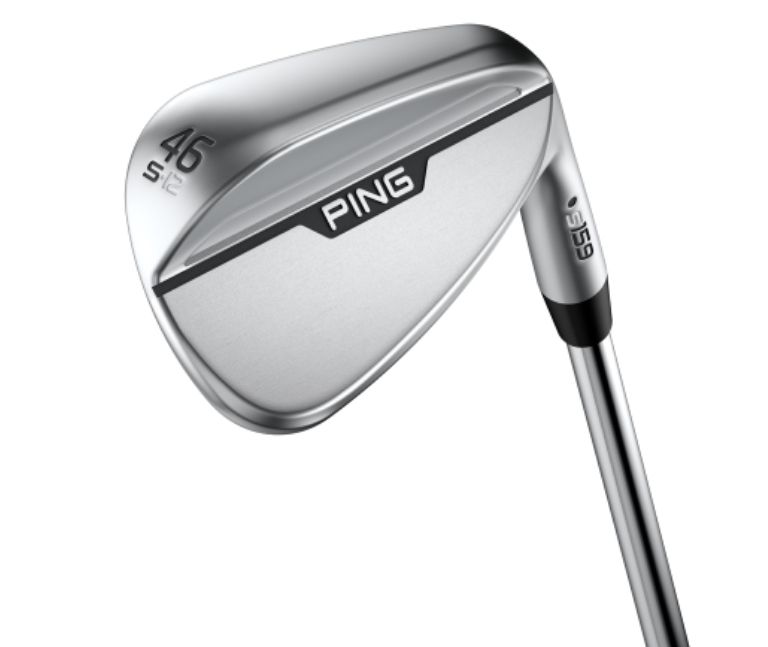
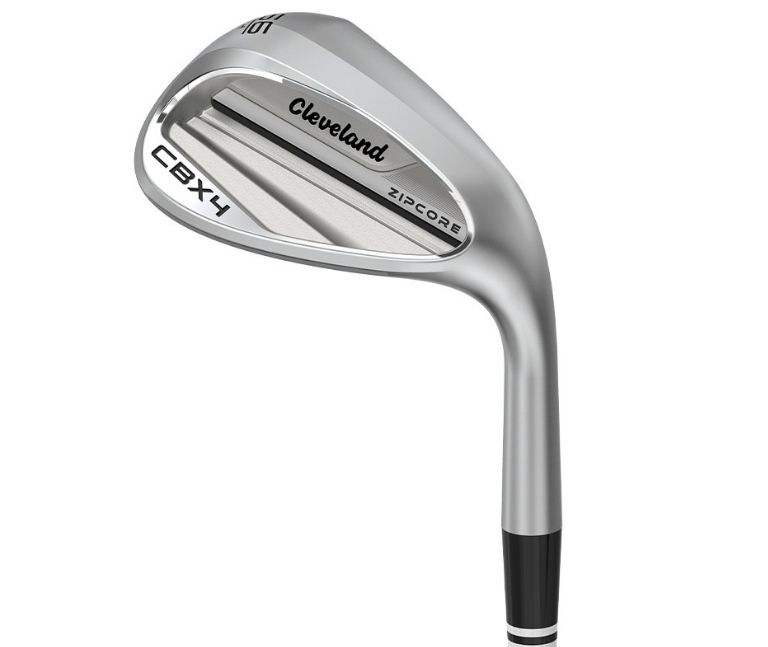
If you are buying a single wedge to complete your bag, the 56° is often one of the most versatile options. Models such as the PING S159, with several sole options available depending on loft, or the Cleveland CBX4 ZipCore, with a slightly more forgiving profile, represent two different approaches within the same loft.
A 60° Wedge Is Not Essential
A well-used 60° wedge allows you to play shots that are more difficult with a 56°: very high trajectories, shots with very little roll, flop shots or chips over a bunker when there is not much green to work with.
It also demands greater precision. It reduces the margin for error on standard shots and can be especially punishing on heavy strikes or when the bounce is poorly matched to the turf conditions.
The question is not whether you are good enough to use one, but whether that loft fills a genuine need in your bag. Does it give you a useful gap below your 56°, and are you going to use it regularly during a round? If the answer is no, that space in the bag may be better used by another club.
52 vs 56 vs 60 Degree Wedges: Which Combination Should You Choose?
52-56-60, 50-54-58 and the Wedge Combinations Nobody Talks About
Fixed spacing between wedges is not a rule, but rather a guideline for maintaining a logical progression of lofts and distances.
With a strong-lofted PW, a PW + 50° + 56° set-up may work better than carrying three wedges that are too close together. Other players prefer 52° + 58° and find that combination covers their needs perfectly.
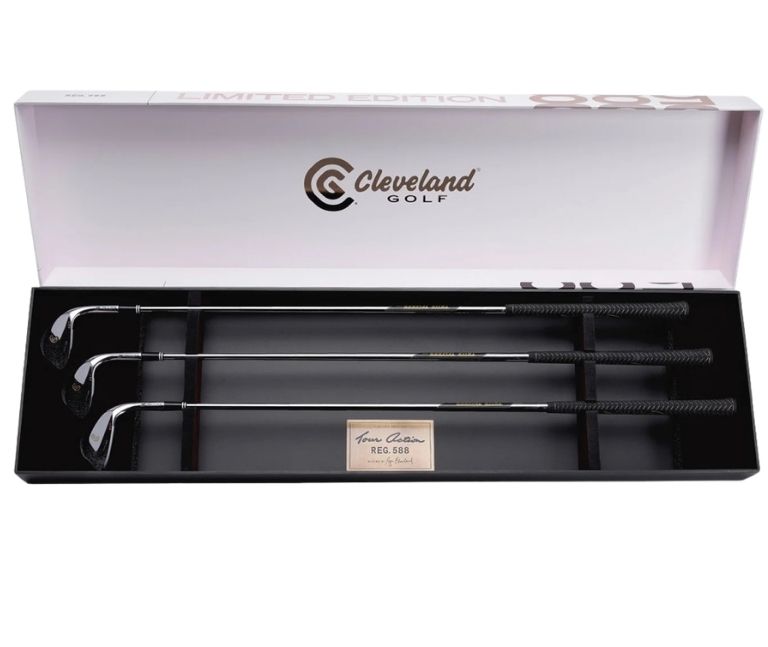
A set such as the Cleveland 588 in 52°, 56° and 60° illustrates the classic set-up, but your choice should start with the loft of your pitching wedge and the actual distance gaps you need to cover.
When It Makes Sense to Carry Only Two Wedges
Carrying three wedges below the pitching wedge is not essential. For some players, two well-spaced lofts simplify decision-making and leave room in the bag for a fairway wood, hybrid or another club that fills a more obvious need.
For example, a PW + 50° + 56° set-up may be enough if you control partial shots well and do not need a very high-lofted option around the green. Other players may feel more comfortable with PW + 52° + 58°, reducing the number of wedges while still keeping options for higher shots.
The best combination is the one that covers your distances without unnecessary overlap and allows you to play the shots you actually use during a round. If a 60° wedge rarely comes out of the bag, that slot may be more valuable elsewhere in the set.
Loft Is Not Enough: Bounce, Grind and the Turf You Play On
Two 56° wedges can behave very differently depending on the sole, bounce and grind.
Bounce helps prevent the leading edge from digging too deeply into the ground. Lower bounce generally works better on firmer surfaces and with shallower, cleaner turf interaction, while higher bounce can help on softer ground, fluffy sand or for players with a steeper angle of attack.
Grind refers to the shape of the sole and affects how the wedge behaves when you open the face. That is why the same loft can produce very different feel and results depending on the configuration you choose.
There is no universal recommendation, because it depends on your technique and the conditions you normally play in. Choosing purely by loft only tells half the story.
How to Measure Your Wedge Distances
Measure Your Gaps Before You Decide
Half an hour on the practice ground can answer the question better than any table.
Choose a target, hit ten balls with each wedge using a full swing and record the average carry, removing the best and worst shots. Then repeat the exercise with a three-quarter swing to see which distances you actually cover inside 100 metres.
Don’t Measure Your Wedges Using Full Swings Alone
Full-swing distance is only one part of the picture. With wedges, it is also useful to know what happens with a three-quarter swing and, if you use that shot regularly, with an even shorter swing.
A 52° and a 56° wedge may be properly spaced on full swings yet produce very similar distances when you shorten the swing. That is why it is worth recording several useful carry distances with each club, rather than only its maximum distance.
The aim is not to have a wedge for every exact ten-metre interval, but to have repeatable shots for the distances you face most often on your course.
This exercise reveals your true gapping. If two wedges consistently cover distances that are too similar, there may be unnecessary overlap. If, on the other hand, there is too large a gap between them, it is worth reviewing the set-up. What matters is that each wedge covers a useful distance and type of shot within your bag.
Start with Your Gaps, Not the 60° Wedge
With a PW of 45° or less, it is worth considering combinations such as 50°-54°-58° rather than assuming that the classic 52°-56°-60° set-up will always be the best option. With a 46°-47° PW, on the other hand, 52°-56°-60° may fit more naturally.
If you are unsure whether to carry two or three wedges below your PW, start with a well-spaced set-up and only add another club once you know exactly which distance or type of shot is missing.
After that, you need to match bounce and grind to the turf conditions and the way you deliver the club into the ball. That is not something you can decide from specifications alone; it needs to be tested by hitting shots. Measure your actual distances first and, if you want to fine-tune the set-up, you can do so during a wedge fitting.