Types of golf bags: the starting point
Before talking about brands or models, it should be clear that not all golf bags serve the same function. Choosing the wrong type is the first mistake most players make, and it conditions everything else.
The choice depends on your mobility: whether you prefer to walk the course or if you always use a trolley. It is not just about aesthetics, but about how that structure will affect your fatigue and how quickly you can access your clubs for each shot.
Cart bags
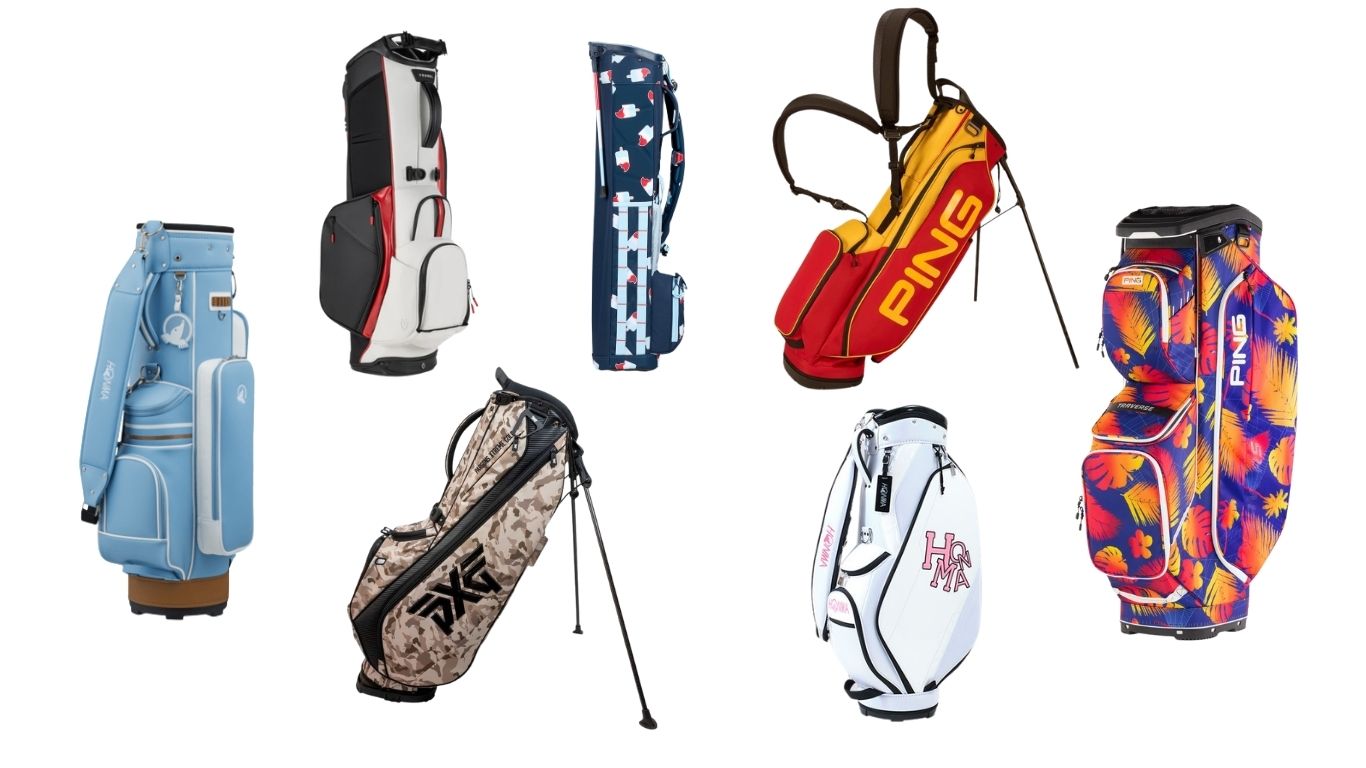
Cart bags are designed to go on a trolley —manual or electric— and not to be carried on your back. They have more compartments, a reinforced base with a trolley attachment system, and greater storage capacity.
They are the ideal choice for players who always use a trolley and want maximum organisation. What makes no sense is carrying them on foot: they weigh more and the weight distribution is not designed for that.

Stand bags or tripod bags
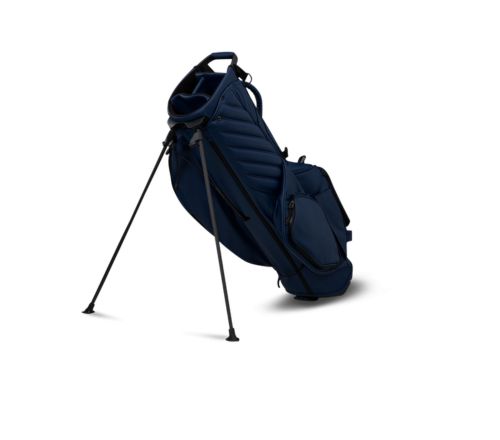
Stand bags incorporate folding legs that allow them to stand on their own when placed on the ground. They are designed to be carried on the back, featuring padded double straps and ergonomic weight distribution.
They are the standard choice for players who walk the course and seek agility between shots. The weight of today’s lightweight models is around one and a half kilograms, which represents a massive difference compared to a cart bag over 18 holes. This lightness is key to avoiding accumulated back fatigue during the round.
Staff bags
Staff bags are the ones used by professionals on the Tour, with the help of a caddie. They are voluminous, heavy, and are designed to visually represent the brand or the player.
For amateur golf, they have no real functional advantage, although they do have an undeniable aesthetic appeal. At Golfriend’s, you can find models from the most exclusive brands such as Vessel or the G/FORE with Vessel collaboration for this segment, joining high-end design with the highest manufacturing quality.

How much should your equipped golf bag weigh?
There is no universal percentage of body weight that every golfer should use as a maximum bag weight. If you walk the course, the priority should be reducing unnecessary weight and choosing a bag that distributes the load comfortably. The right weight depends on your fitness, the course, the weather and the equipment and water you need to carry.
Most amateur players easily exceed this limit. Rounds with excess water, umbrellas that are not used, balls accumulated from previous months, or forgotten jackets… it all adds up.
A player fatigued by the weight of the bag loses consistency in rotation and tempo. That is why choosing one of our lightweight golf bags is the best investment to keep your performance intact until the 18th hole.
What to really carry in a golf bag
This is the minimum essential content for a full round at Golfriend’s, without excesses:
• Clubs: Up to 14 according to the rules. Analysing which clubs you actually use and removing the surplus is the most effective way to reduce weight.
• Balls: Between 6 and 9 balls is enough. Carrying 20 or more is an unnecessary burden.
• Gloves: One in use and one spare. In summer, a second dry glove makes all the difference.
• Tees and accessories: A handful of tees, two markers, and a folding pitch mark repair tool.
• Measurement: A single golf GPS device or rangefinder, not several.
• Clothing and supplies: Rain gear only if the forecast justifies it.
Carry enough water for the temperature, length of the round and availability of refill points on the course. In hot conditions, particularly on the Costa del Sol, a fixed amount should not be treated as suitable for every golfer.
Featured brands and models
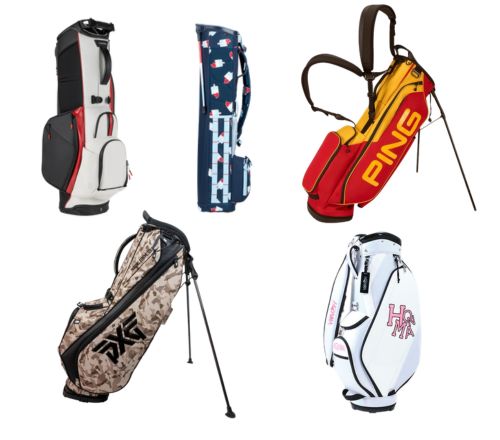
• Vessel: The benchmark in premium construction. Models such as the Player V or the Lux Carbon combine high-end materials with meticulous craftsmanship that goes beyond simple functionality.
• OGIO: Stands out for its technical innovation and systems like the Silencer, which protects clubs from vibrations. Its new cart bags from the All Elements range are ideal for those who prioritise organisation and protection.
• Big Max: The European benchmark in high performance. Its Dri Lite range is highly valued for its water resistance, making it a solid choice for variable weather conditions.
• Ping: Offers technical and durable bags with specific models like the Monsoon, designed with water-repellent construction for rainy days.
• PXG and HONMA: Complete our offering in the luxury segment for the golfer seeking the ultimate detail in their equipment.
Bags for walking players
Walking golf is experiencing notable growth, especially among younger profiles looking to integrate physical activity into their round. For this profile, the weight of the golf bag is not a secondary detail: it is one of the most important factors in the playing experience.
Carbon tripod models or ultra-lightweight fabrics have reduced empty weight to levels that were unthinkable only a few years ago. Seeking a stand bag under 1.5 kg empty is a completely reasonable criterion in 2026.
Investing in material technology not only makes your round more comfortable but also protects your energy so that the last putt of the day is just as precise as the first.
The final criterion: adapt the bag to your way of playing
There is no universally best bag. There is only the bag that best fits your frequency of play, your way of moving around the course —on foot, with a manual or electric trolley— and the usual conditions in which you play.
A player on the Costa del Sol who plays three times a week with an electric trolley has completely different needs from someone who walks the course once a week in northern Spain. Before choosing, define those parameters. The rest —brand, aesthetics, compartments— will follow naturally once the technical basis is clear.
At Golfriend’s, we are here to advise you and help you find that perfect model among our wide range of bags. Visit our online golf shop and ensure your equipment works in your favour on every hole.