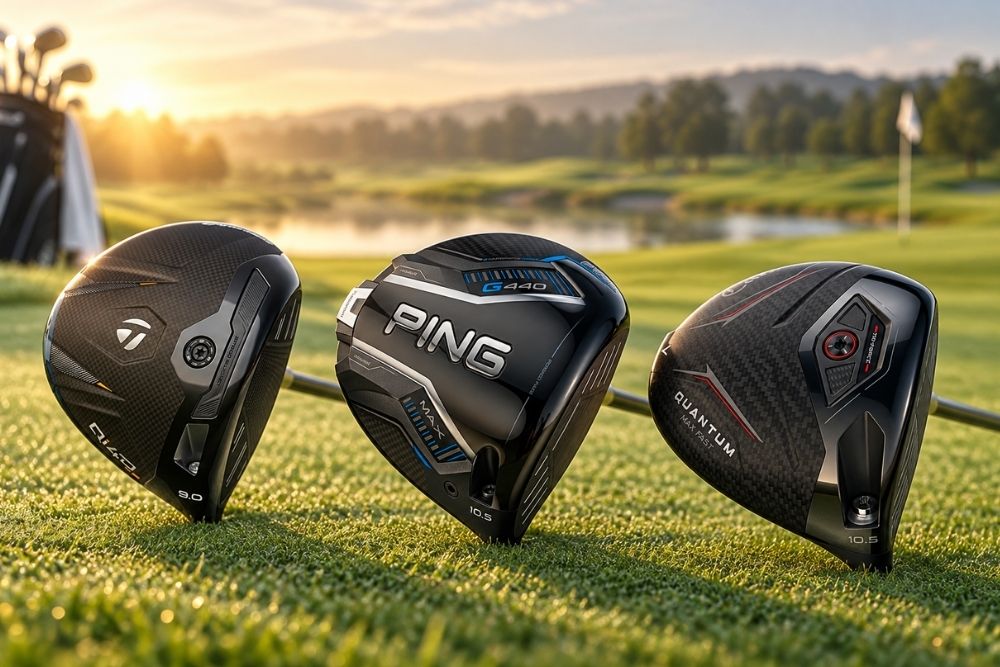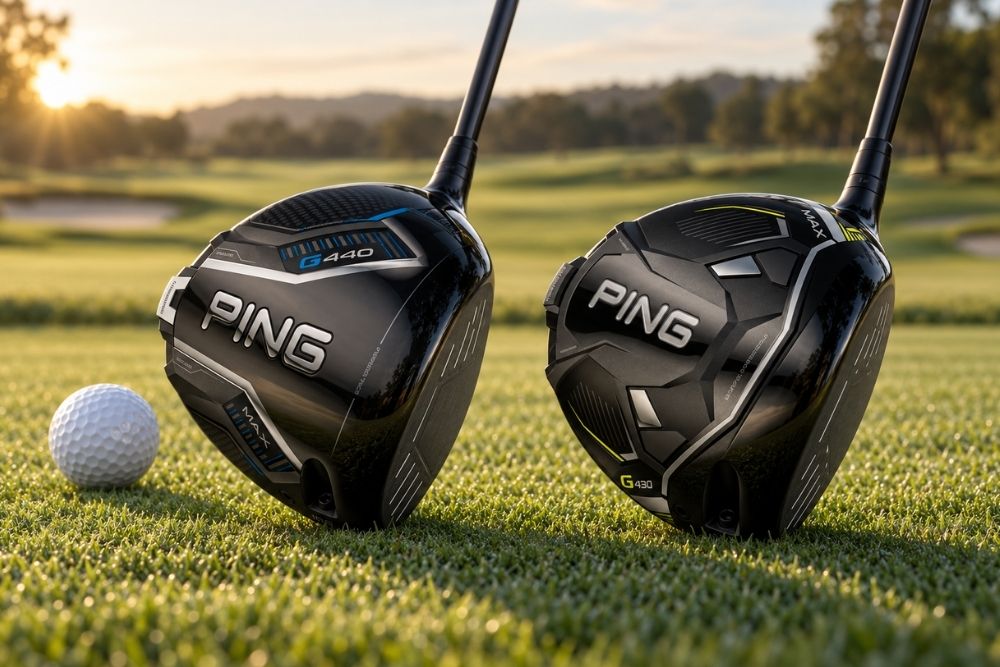
PING G430 vs G440: if you already play a PING G430 MAX, the decision to change should not start with the specification sheet, but with what you need to improve in your current set-up.
- Change if you need a different launch window, a different overall weight or an adjustment that your current G430 cannot provide.
- Do not change yet if it is properly fitted and your numbers are good. The G440 introduces changes to weight distribution and configuration, but that does not mean it will automatically improve your results.
- Test it if you have a specific problem — high spin, dispersion to the right or insufficient height — because then you will know exactly what to compare during the fitting.
From here, we will look at what really changes from the PING G430 MAX to the PING G440 MAX, which differences come from club length, shaft choice or weight distribution, and what would need to improve in your numbers for the upgrade to be worthwhile.
PING G430 vs G440: What Really Changed from MAX to MAX
We are comparing the equivalent versions from each family, in other words, MAX against MAX. The PING G430 MAX should be compared with the PING G440 MAX. Comparing a G430 MAX with a G440 LST or a G440 K can lead to conclusions that are not particularly useful, because they are designed around different performance goals.
| Specification | G430 MAX | G440 MAX |
|---|---|---|
| Standard length | 45 3/4" | 46" |
| Head weight | 206 g | 203 g |
| Back weight | 25 g | 29 g |
| Key technologies | G430 MAX design | Carbonfly Wrap + Free Hosel |
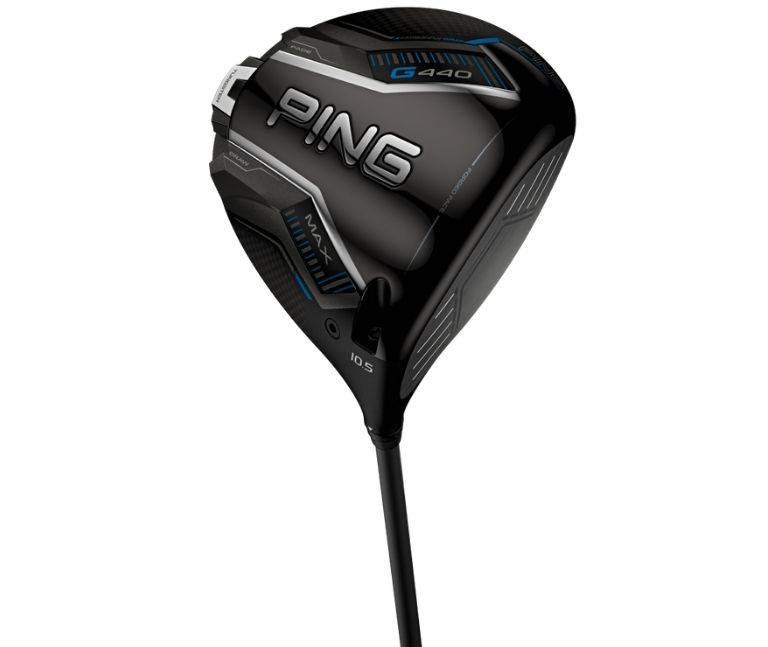
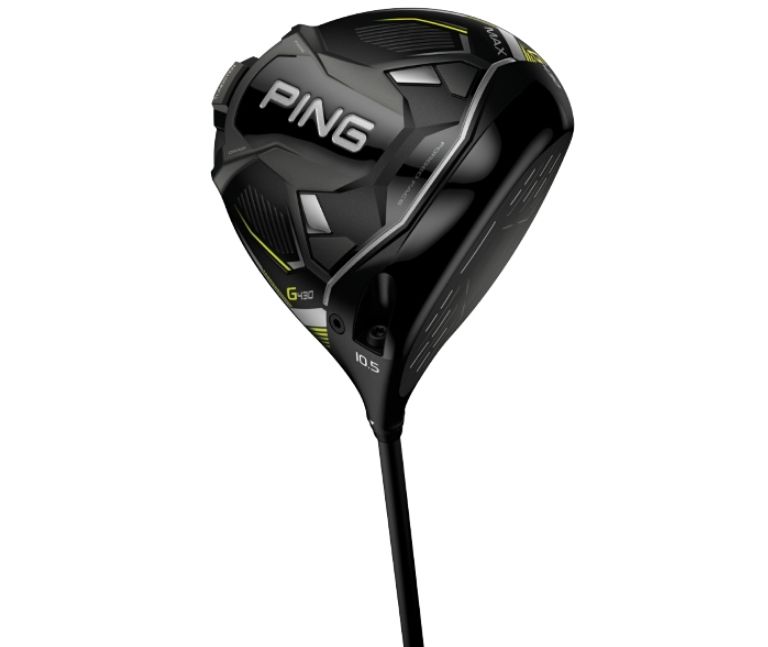
The PING G440 MAX distributes weight differently: it uses a slightly lighter head, with more weight concentrated towards the rear, together with a construction that frees up material from the crown and hosel so it can be repositioned to improve stability, forgiveness on off-centre strikes and produce an efficient launch window.
Pay attention to length. A quarter of an inch is not a minor detail when comparing two drivers: it can affect swing weight, clubhead speed and strike location. If you compare the standard configurations with the ALTA shaft, the G430 MAX measures 45 3/4″ and the G440 MAX 46″. Part of the difference you see on the launch monitor may come from the build rather than from the head alone.
The same applies to the other variables. Before drawing conclusions, it is worth checking which shaft each club has, the hosel setting and the loft being used. A G430 that has not been adjusted since purchase is not being compared on equal terms with a G440 that has just been fitted to the player.
What a Specification Table Does Not Tell You
Three grams more or less does not explain why one player feels comfortable with one driver and not another.
Sound and impact feel change from one generation to the next, as does the way the head looks and feels at address. Above all, each model responds differently to your strike pattern: if you tend to miss towards the heel or toe, how well the club maintains speed and direction in those areas matters more than what happens on a perfectly centred strike.
None of that appears in a specification table, but it can be decisive when working out whether the upgrade is genuinely worthwhile.
How to Compare the PING G430 and G440 Properly
What We Would Measure If You Tested Both in the Same Session
We have not carried out a controlled head-to-head test between the two models, so you will not find a table of invented figures here. What we can tell you is what we would measure and what any player should check before paying the difference.
The comparison should be carried out with the same player, the same ball and during the same session, using both drivers with equivalent shafts and lengths wherever possible. It is also worth hitting the same number of shots with each and applying the same criteria when excluding obvious mishits.
These would be the main metrics:
- Carry: the typical result across the session matters far more than the best shot.
- Lateral dispersion: to see which head keeps more shots within a useful target area.
- Launch and spin: to determine whether the ball-flight window genuinely improves.
- Ball speed: important, but not enough on its own to choose a driver.
With those numbers in front of you, the useful question is not which club produced the longest drive, but which driver delivers more repeatable results and retains performance better when the strike is less than perfect.
From the Fitting to the Course: Check Whether the Improvement Holds Up
A driver can produce better numbers during a fitting session without automatically becoming a genuine improvement on the course. As well as carry and dispersion, it is worth considering whether the new set-up allows you to stand on the tee with confidence and repeat your swing without having to adapt your movement to the club.
If the difference between the G430 and G440 is small in the data, pay particular attention to less-centred strikes and overall consistency. A marginal gain in distance may have little value if it increases the variation between your best and worst drives.
The upgrade makes more sense when the improvement appears consistently: a better ball-flight window, tighter dispersion or greater stability without needing to change your swing.
Who Has the Most to Gain from Upgrading?
The player with a poorly fitted G430. This is one of the situations where testing makes the most sense: a premium driver being used with the stock loft, standard shaft and hosel setting unchanged since purchase. The G440 may appear clearly better, but part of that improvement could come from the set-up. Before changing, it is worth checking what a properly fitted G430 can actually deliver.
The player who needs a different set-up. If you are looking for a different launch window, different face behaviour or a different weight distribution, the G440 may offer options that suit your swing better. In this case, there is a technical reason to compare the two generations, rather than simply wanting a new driver.
The player whose G430 already produces good numbers. If carry is consistent, the ball-flight window is appropriate and dispersion is under control, the scope for improvement may be limited. In that case, the G440 would need to show a clear and repeatable improvement to justify the upgrade.
When Is It Worth Changing Just the Shaft?
Before replacing the entire driver, it is worth checking whether the problem really lies with the head. Changing the shaft can alter how the club loads, face control and strike consistency without forcing you to move on from a G430 that still performs well.
If the ball flight is reasonable but you struggle to repeat the strike, dispersion increases when you swing harder, or the driver feels too heavy or too light, testing a different shaft weight, flex or profile may be more useful than switching straight to the G440.
Where possible, the comparison should be made using the same head. That way, you can see whether the improvement comes from the shaft and overall build or whether you genuinely need a different clubhead.
What If I Have a G430 MAX 10K?
In that case, the comparison changes. The G430 MAX 10K was designed to maximise MOI, so its logical equivalent in the current range is the G440 K, not the G440 MAX. Comparing it with the MAX mixes two different approaches: one prioritises maximum stability, while the other aims for a more balanced all-round set-up.
If you are coming from a 10K, the most useful comparison is directly against the G440 K, paying particular attention to dispersion and performance on off-centre strikes, because that is where this type of head should make the biggest difference.
If the Upgrade Is Not Worth It, There Are Other Options
Sometimes the problem is not the driver, but the club immediately below it. A large gap between your driver and fairway wood can force you to manufacture shots from the tee or leave important distances poorly covered. That is why it is worth reviewing the top end of your bag before deciding that the G430 is the problem.
And if you ultimately decide that it is time to upgrade, our guide on which driver to choose based on your swing speed compares the main options according to speed, launch, spin and forgiveness, rather than looking at just two models.
What the G440 Needs to Improve to Justify the Upgrade
The upgrade is justified when carry improves consistently without increasing dispersion, or when the new set-up produces a clearly more efficient ball-flight window. A couple of extra metres on the best shot of the session should not decide the purchase.
There is also a logical order that can save you money. First, it is worth getting the most out of the G430 you already have: loft, lie, weight and, above all, the shaft. After that, it makes sense to compare it with the current generation to see whether the improvement really comes from the new head.
If the numbers still do not convince you after adjusting it, then it is worth carrying out a comparison under equivalent conditions: the same ball, the same session and similar club lengths. You can first review the driver range available at Golfriends to see which set-ups are worth testing.