What your swing speed really tells you
- Club speed. How fast the clubhead is moving. It sets the general parameters for weight, length and shaft profile.
- Ball speed and smash factor. The relationship between the two helps describe your strike pattern and indicates how efficiently you are finding the centre of the face. Improving smash factor at the same swing speed is almost always one of the cheapest gains available, because it comes from strike location rather than from changing the clubhead.
- Launch angle and spin. These are the two factors that turn speed into real distance. Too little of both and the ball falls out of the air. Too much of both and it climbs too high and loses distance. The right combination depends on your swing speed, which is why there is no universal set-up.
- Dispersion. This is one of the most overlooked figures during a fitting, yet one of the most important for scoring. A driver that gains five metres on average but widens your dispersion by fifteen metres is not helping.
When it is difficult to generate height and carry
With a slow or moderate swing speed, one of the most common problems is using a driver that is too heavy, too long or has too little loft.
For this type of player, it usually makes more sense to test lighter builds, manageable lengths, shafts that allow you to swing freely without forcing the motion, and enough loft to produce an efficient ball flight.
Reducing loft purely in the hope of gaining more distance can have exactly the opposite effect if the ball no longer launches high enough.
- XXIO 14. A family traditionally aimed at reducing the overall weight of the club and making it easier to generate speed.
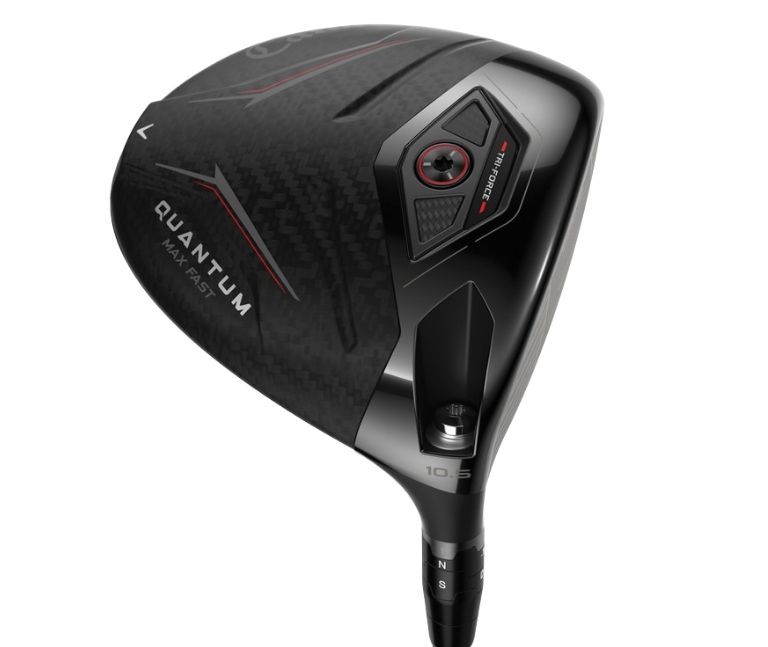
- Callaway Quantum Max Fast. Its lightweight set-up is designed for players looking to make swing speed and launch easier to achieve.
- PING. The brand caters for this type of player through specific configurations within its range that are designed to reduce weight and make launch easier.
One important point: for this type of player, changing only the clubhead without reviewing the shaft, length and overall weight may leave a significant part of the problem unresolved.
Moderate swing speed: the balance comes from finding the centre of the face
Many amateur golfers do not need more ball speed; they need to repeat their strike more consistently.
For this type of player, a stable, forgiving head often works best, combined with enough loft to maintain an efficient ball flight even on off-centre strikes. The PING G440 Max fits this approach well thanks to its combination of stability, forgiveness and adjustability.
The question should not be “which one goes furthest?”, but “which one maintains carry and dispersion best when I do not strike the centre of the face?”.
The answer lies in the average across the whole session, not in the best shot.
High swing speed: when low spin helps and when it hurts
A low-spin driver is designed to solve a very specific problem: excessive spin.
If you generate plenty of speed and the ball climbs too high or becomes less efficient through the air, models such as the PING G440 LST or TaylorMade Qi4D LS may make sense as part of a fitting session.
Even so, a low-spin driver is not automatically better for a faster player. If your launch is already low, your spin is under control or your strike is inconsistent, reducing spin too much can cost you carry and make off-centre strikes more punishing.
The key is to compare the average across the whole session and your worst strikes, not just the longest drive.
Best Golf Drivers: Callaway Quantum vs PING G440 vs TaylorMade Qi4D
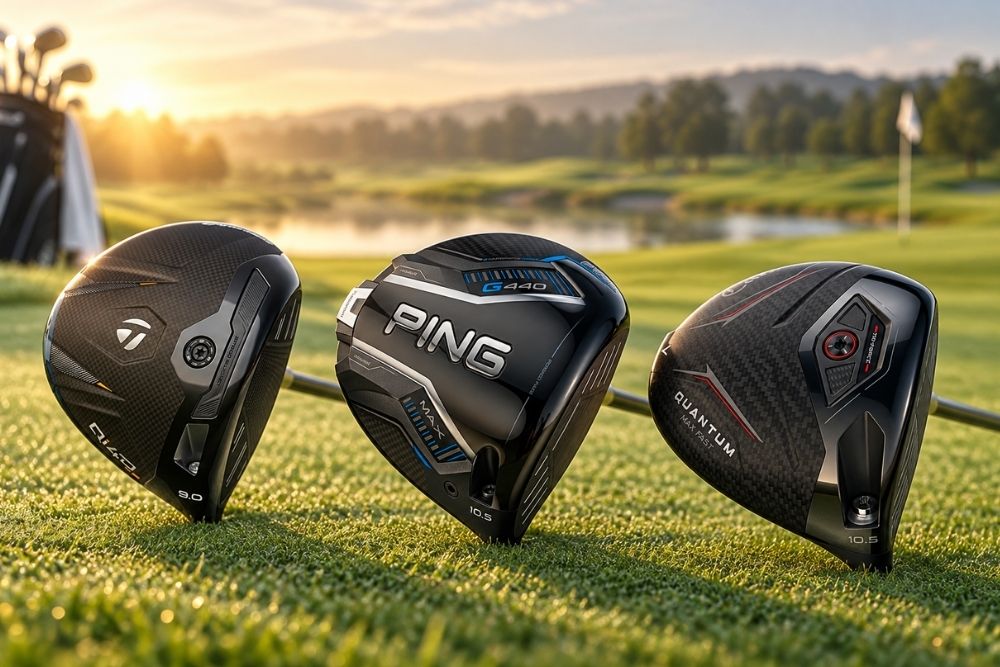
Among the current best golf drivers, we find very different set-ups, ranging from models designed to make speed and launch easier to achieve to low-spin heads aimed at faster players.
The Callaway Quantum Max Fast, the PING G440 Max and the TaylorMade Qi4D LS represent three particularly useful approaches for understanding how a driver should be chosen: making speed and launch easier to achieve, improving stability or controlling spin.
| Driver | What it prioritises | Player profile I would consider first | When it would not be my first choice |
|---|---|---|---|
| Callaway Quantum Max Fast | Light weight, ease of generating speed and launch | Players with slow or moderate swing speeds who need help generating height and carry | If you already generate plenty of speed and specifically need to reduce spin |
| PING G440 Max | Forgiveness, stability and consistency | Players with moderate swing speeds or those who prioritise tighter dispersion and repeatable results | If your strike is very consistent and you specifically need to reduce spin |
| TaylorMade Qi4D LS | Lower spin and control of a more penetrating ball flight | Faster players who generate too much spin and strike the face consistently | If you launch the ball low, need help getting it into the air or have a widely dispersed strike pattern |
Callaway Quantum Max Fast: Easier Speed Generation
The Callaway Quantum Max Fast follows a different philosophy from a low-spin driver.
Its design is focused on reducing the effort required to generate speed and making it easier to produce an efficient ball flight, so it makes sense to test when a player struggles to swing a heavier set-up comfortably.
It may be particularly well suited to players with moderate swing speeds, those who struggle to generate enough height, or golfers who begin forcing the swing in an attempt to gain distance.
The important comparison is not how much the driver weighs on paper, but whether it can increase ball speed and carry without compromising dispersion.
PING G440 Max: When Consistency Matters Most
The PING G440 Max makes more sense when the challenge is not producing one exceptional shot, but repeating good results consistently.
It is the type of head worth testing for players who alternate between centred strikes and shots that drift slightly towards the toe or heel, and who are looking to maintain a more stable ball flight.
If it can retain ball speed better on off-centre strikes and reduce dispersion, it may ultimately prove more effective on the course than another driver that only produces a higher number on the very best shot.

TaylorMade Qi4D LS: When There Is Too Much Spin
The TaylorMade Qi4D LS is designed for players who already generate enough speed and need to control excessive spin to produce a more efficient ball flight.
It can make sense when the ball climbs too high or loses distance because of too much spin, but it is not automatically the best option for every fast-swinging player.
If launch is already low or strike location varies significantly across the face, reducing spin even further can hurt carry. That is why it is worth comparing it with a more stable head using the results from the whole session, not just the best shots.

So, Which One Should You Choose?
There is no universal winner among the three.
- If you need help generating speed and height, I would start by testing the Callaway Quantum Max Fast.
- If you are looking for a balance of forgiveness, carry and dispersion, I would include the PING G440 Max.
- If you already generate plenty of speed, strike the ball consistently and produce too much spin, I would test the TaylorMade Qi4D LS.
The final decision should be based on average carry, launch, spin, ball speed and dispersion, not on which driver produces the longest shot of the entire session.
What a Fitter Would Look at Before Recommending a Driver
| Symptom | Data to check | Adjustment or change to try |
|---|---|---|
| The ball falls out of the air without enough carry | Launch angle and spin | More loft, a lighter shaft or a set-up that makes launch easier |
| Good carry, but too much dispersion when swinging faster | Face-to-path and dispersion | Hosel adjustment, weight distribution or a more stable head |
| High ball speed but less distance than expected | Spin rate | Try a lower-spin set-up and review the loft |
| Inconsistent distance from shot to shot | Smash factor and strike location | Review club length, overall weight and head forgiveness |
| Your best shot goes a long way, but the average does not improve | Average carry and dispersion | Compare average results and dispersion, not personal bests |
How to Test Three Drivers Without Fooling Yourself
The comparison should be carried out under conditions that are as similar as possible: the same ball, the same session and enough shots with each set-up.
Record at least:
- Average carry.
- Ball speed.
- Launch angle.
- Spin.
- Dispersion.
- Strike pattern across the face.
Do not automatically remove every poor shot. Those strikes are precisely where many of the differences between a more demanding head and a more forgiving one become apparent.
It is also better to test three set-ups with different objectives than three brands chosen simply to decide which one wins.
- A set-up designed to generate more height.
- A stable, forgiving set-up.
- A set-up designed to reduce spin.
This comparison helps reveal what your swing actually needs, which is far more useful than knowing which driver produced the longest shot of the session.
Speed Is the Starting Point, Not the Verdict
Swing speed helps narrow down the options, but it should not determine on its own which driver you buy.
- If you generate less speed, start by reviewing weight, length, loft and ease of launch.
- If you are in the moderate-speed range, pay particular attention to average carry and dispersion.
- If you generate plenty of speed, check launch and spin first before assuming that you need a low-spin head.
The rest comes down to measurement. A fitting session allows you to compare different set-ups with the same swing and see which one delivers the best balance between distance and dispersion.
If you are also deciding what to carry immediately below your driver, our comparison of driver, 3-wood and hybrid answers the other half of the question.